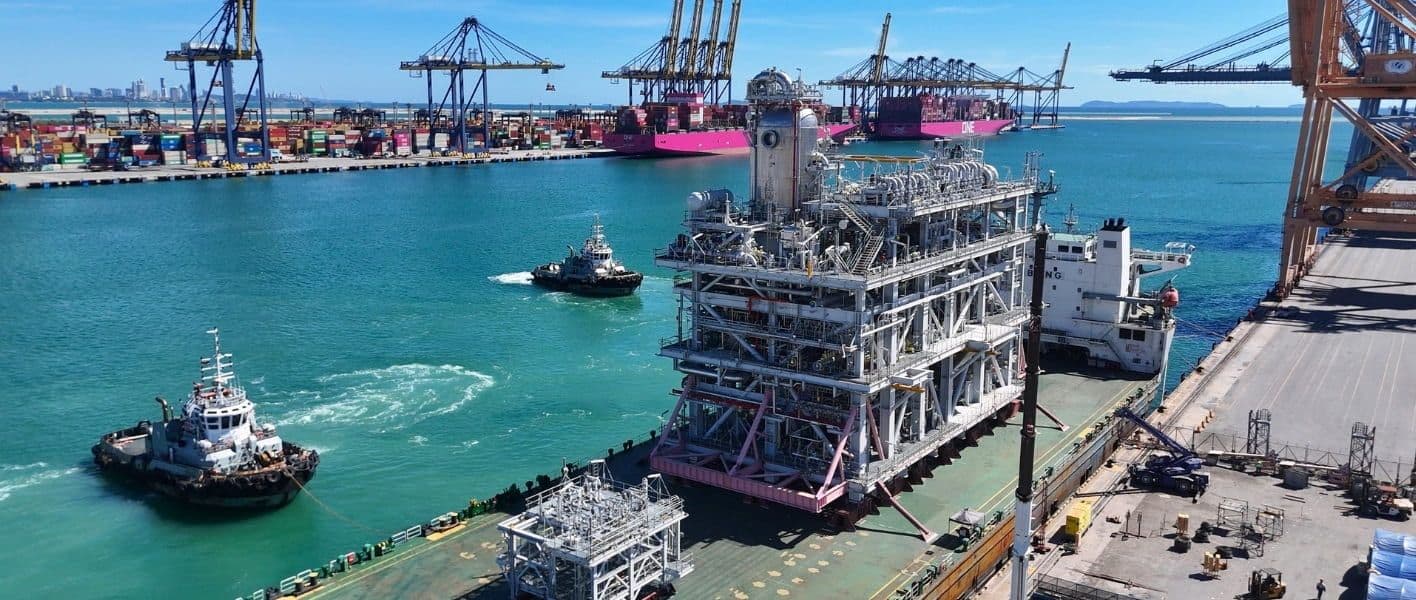
Woodside’s Scarborough and Pluto Train 2 developments were 99% complete at the end of the third quarter of 2026, with the first LNG cargo still scheduled for the fourth quarter, Offshore Energy reported. The projects remained within budget, although the completion figure excludes modifications to Pluto Train 1. Commissioning and start-up work continued on the floating production unit and subsea system, including well clean-up and gas exports to pressurise the trunkline.
According to the report, Woodside said well clean-up results matched its expectations for reservoir and well performance. All mechanical runs of the Pluto Train 2 compressors had been completed, and Scarborough gas entered the train’s gas pre-treatment section after the quarter ended. Work on the liquefaction section continued. Separately, modifications enabling Pluto Train 1 to process Scarborough gas progressed following its second-quarter maintenance shutdown. The final module had reached the site, where work centred on connection and integration.
At Louisiana LNG, overall construction was 32% complete at quarter-end and remained on budget. Offshore Energy reported progress across marine works, site preparation and LNG storage tanks, with concrete work on Tank 1’s wall halfway finished. Train 1 was 41% complete, while Trains 2 and 3 stood at 27% and 22%, respectively. Above-ground piping installation had begun for Train 2, and the first concrete foundation had been poured for Train 3. First LNG remains targeted for 2029.
Woodside continued discussions with prospective equity participants and LNG offtakers for Louisiana LNG. The company said it was addressing structural steel supply difficulties associated with continuing Middle East disruption through alternative transport routes and fabrication sources.
In Mexico, the Trion development was 71% complete and on budget, with first oil targeted for 2028. Ten of its 24 wells had been drilled and the first subsea tree installed. Delivery of subsea equipment and the disconnectable turret mooring buoy allowed offshore installation to start. Floating production unit fabrication reached 96%, while construction of the floating storage and offloading vessel advanced, including integration of the turret into its hull.